Friday, 30 October 2015

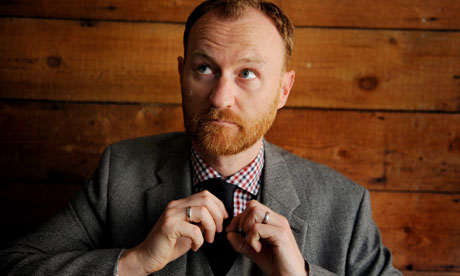
Masterclass with Mark Gatiss

On Friday the 16th of October, we were lucky enough to get a masterclass with Mark Gatiss, surprisingly his birthday was the very next day! He is well known for writing and directing the TV Series Doctor Who.  He is also an actor that is well known for playing a part in Sherlock. During the 2 hour masterclass I had taken down notes of what he had mentioned that I thought were significant and may help me in my personal aspiration to become an actor. 

Mark Gatiss' most favourite thing about being an actor is that he loves meeting new people and in his terms, it is important to have a laugh. However, his least favourite thing about being an actor is that the experience does not get less terrifying due to the fact that it flows naturally now and there are rarely any challenges that he faces when it comes to a new role. Gatiss also mentioned that he has done TV mostly over stage and radio. He had also helped write 2 episodes of Game of Thrones In Belfast. At one point, he was asked at the premiere 'who should be on the iron throne?' - he said himself! In addition at one point, during filming, he had got lost on set!

Another interesting fact that Gatiss mentioned was that his favourite type of films were the Early American films. One of the inspirations that fueled Gatiss to write was Agatha Christie's crime - which greatly contributed to Sherlock.

Mark Gatiss loves to collaborate with other writer/directors and says that collaboration is a very good thing in the creative industry. Furthermore, when it comes to writing, Gatiss says he puts himself in the shoes of past icons to make the piece more realistic. However, when it comes to acting Gatiss sometimes improvises on his own script as it makes his character flow through who he really is and both eventually merge in to one making his character his own. Throughout how writing career, he had written a Christmas Horror where his moral raised, which was always be positive, the world is very dark - it can collapse all at once or can keep going. Furthermore his inspirations of the creatures which make an appearance in the TV Series Doctor Who was about the story and  that there were no limitations in the world of writing . An important aspect that he had mentioned is that in order to write about a specific generation is that you have to be in it to write about which I had found truly inspiring.

Rehearsals

Whenever it came to rehearsals, going over lines is a key aspect of allowing the rehearsal to flow smoothly. This is due to the fact that with the lines memorised, the scene can be performed in different forms and can be played around with in order to see what techniques work in what place and a specific line or period within the scene. 

My group were part of the Antigone group and were set the task to use our interpretation in the scene of Haemon and Creon arguing. After going over the lines we had come up with the idea that Creon was disrespecting his father and that Haemon saw his son as disobedient to elders. In result, we had decided to set the scene by Peter, who was playing Creon, and I to be discussing the situation behind his father's back and in turn Marion, playing Haemon, to over hear the conversation. This lead to the situation of Haemon bursting in with anger and confusion. Me on the other hand was playing the leader and chorus, where in our interpretation, I was observing the situation and came to the conclusion that peace was what was needed and that brawling was not the solution. In addition, this lead to the idea of my monologue at the end of the scene that love could not hold these two together, but peace should arise, as well as apologies.

As we had explored our scene even further, we had been set the task of composing a letter as our character to another character in the scene or the whole piece. My letter was to Creon, asking to apologise to his father Haemon as personally I felt that it was not at all polite to argue with the one who raised you since his father raised him with care and love which contradicted to the fact that there was no love found in the scene itself. The letters allowed us to explore our character in more detail of our own interpretation and exposed our understanding of the scene itself.

As we had got more confident with our scene, we had decided to play around with it to see if we were pronouncing words clearly, with diction and correct projection. For example, we had tried different accents such as Liverpudlian, American and so on. In addition we had also increased the pace and did the scene backwards, this was to help test our knowledge of the scene along with confidence.

Tuesday, 20 October 2015

Class

Every session my drama class had always began with a series of warm ups. Warm ups help benefit the pronunciation of words and to make sure that we know how to control our breath at any pace with consistency. Furthermore it helped us sustain our diction no matter what word was mentioned. Especially in this case due to the fact that we are doing a Greek play where words and phrases are not the language we often use today.

Some of the warm ups consisted of expressing vowels and consonants individually, such as 'O' and 'D' and 'T'. This helped us make sure that our mouths  were loose in order to pronunciate words properly and that they were said with purpose. Furthermore we had used this to expose our projection and how powerful it is when we breathe properly. When we breathe in our stomach has to go outwards meaning that our longs are expanding to the fullest and this in result would benefit in a long sustain in breath and powerful projection. This is due to the fact that we are not straining our vocal chords and that we are putting most of the power of our vocals from our diaphragm rather than just our vocal chords alone. Another warm up we had usually done at the start of every session was that we had made sure our body was always neutral so that we could act naturally rather than forcefully if our bodies were tense. We always had to make sure that our feet was always parallel and that our knees were loose. In addition, we had to make sure our back was straight, our arms had to be by our sides and our heads had to be up as if a a string was attached to the ceiling. This was all to ensure that our bodies were ready for performing and moreover acted as a blank canvas.

Other warm ups we had used were tongue twisters such as 'peter piper picked a peck of pickled peppers' and 'red leather, yellow leather'. This helped us sustain our pronunciation of words at a neutral speed and also helped our articulation. The breathing exercises done before this can help in this exercise as breath control is a key aspect in tongue twisters. In other words, this exercise is a test to examine if we had warmed up our breathing properly.

The Theatre of Ancient Greece

Background to Greek Theatre

What is Greek Theatre?                                                                                                                        
In Greece, there were many religious festivals which were in need of theatres. In result, in almost every Greek City, many theatres were built in order to support these festivals.

What is the Theatre of Ancient Greece?
The theatre of Ancient Greece was built in 700BC and is located in the City of Athens. It is a significant cultural, political and military powered theatre at this period of time an dis part of a festival called Dionsysus.

What is the structure of the Theatre?
The Theatre of Ancient Greece consists of a number of buildings which are called theatrons and they were very large with open air structures on the slopes of hills. The structure of the Theatre is mainly structured in to three parts. One part is the orchestra, a large circular or rectangular area at the centre part of the theatre where plays, dancing, religious rites and acting take place. Another part of the theatre is the skene, which is used as backstage. Finally, the audience is considered to be the most important part of the theatre due to the fact that they may represent an actor as well.

Elements of Theatre of Ancient Greece
The Ancient Greek term for a mask is prosopon, in other words 'face' which was seen as a significant element in the belief of Dionsysus at Athens, which is mostly used in ceremonies and celebrations. Masks are often used when they are only a few actors in the performance. The actors are usually more than one character and are needed to use masks to portray another character. The actors in these plays that had tragic roles wore boots called cothurni that elevated them above other actors. Actors with comedic roles only wore a thin soled shoe called a sock. 

Playwrights
The Theatre of Ancient Greece had many playwrights which had provided the numerous theatres with life, such as Aeschylus. Aeschylus was born in 525 BC and died in 456 BC. The plays written consisted of The Persians (472 BC), Seven Against Thebes (467 BC), The Suppliants (463 BC), The Oresteia (458 BC) and Prometheus Bound. Within these performances consisted of different actors; one of them which were considered to be an actor was called a Chorus.

What is the Greek Chorus?
The Greek Chorus acts as thoughts aloud, fears and hidden secret, which can be portrayed through singing, dance and acting. A chorus can range in size from as little as 12 people to a mass of 50. They can be argued to be an actor in itself as it normally voices on dramatic action. In addition, they can be also be considered as the audience of the play due to the fact that there are reacting to anything significant event that occurs within the performance.

Masks
In Greek performances, masks are often use for particular purposes. One is that actors may have had to learn more than one character role, masks would have been a beneficial factor and in result we knew that we had to portray each of our characters well as some of us played the same characters. Furthermore we did not have masks so we had to ensure that the people in our class with the same characters had to portray the characters consistently to make their character more convincing to the audience that although it was a different person being the character, the personality of that character must be the same.

Themes in Greek Theatre
With the play we had been given to explore and perform, during the process of rehearsal, we had to make our interpretations on the type of performances that may have taken part back in Ancient Greek. For example, due to the monologue I had to learn as the chorus myself, the main theme of it was love and relationship, especially between Haemon and Creon. Throughout the scene I had taken part in was a feud between them and it revealed how rigid the relationship was  between father and son. In addition, this may also suggest that the closest people that take care of you may also be the ones that hurt you the most; this is shown in the scene where there is an argument between Oedipus and Creon where Oedipus calls him a traitor. Another clear theme of Greek plays which is shown in this scene as well is death and tragedy due to the fact that someone had been murdered at three cross roads.

Additional themes that can be suggested is identity as Oedipus did not know who he really was as he was told that he was found as a baby in Kithairon by shepherds and was raised by King Polybus and Queen Merope in the city of Corinth.